
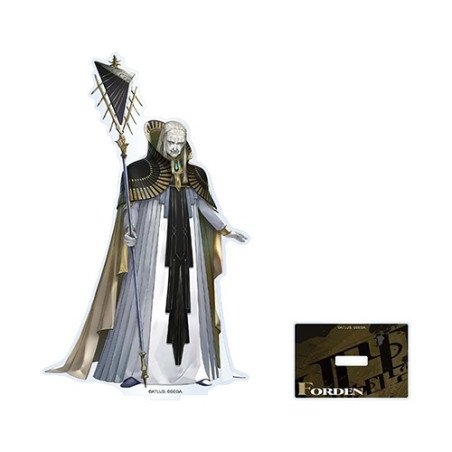
If you’re curious about story-driven RPGs, “Metaphor: ReFantazio” offers an intricate look at how power and ambition collide in a kingdom on the verge of change. Set in the United Kingdom of Euchronia, you play through a political contest for the throne triggered by the king’s assassination. At the heart of this struggle stands Sanctifex Forden, the church’s supreme leader, whose ambition and manipulation reshape Euchronia’s history—and threaten its future.
Forden’s Identity and Role
Sanctifex Forden, whose full name is Aestivum Svafriam Forden, starts as one of the game’s most influential antagonists. He is known simply as “Sanctifex,” holding the position of 78th Sanctifex of the Sanctist Church, which is the recognized state religion. You see him running the Euchronian Senate, overseeing church affairs, and acting as gatekeeper to official state power. This means Forden combines spiritual, political, and legislative leadership in a way that few can challenge.
He is also one of the principal organizers and contestants in the Tournament for the Throne. When the last king dies without an heir, Forden positions himself as a front-runner by leveraging the church’s support among Euchronia’s population. If you’re mapping key players with the strongest public backing, you’ll often find Forden’s name first on the list.
Personality and Motives
Forden operates with a blend of charisma, arrogance, and calculation. Many characters describe him as power-hungry and deeply manipulative, preferring to work through subtle influence, propaganda, and deals rather than direct violence. Still, he is openly bigoted against the Elda, a marginalized tribe whose fate is connected to the kingdom’s suspected heir—a half-Elda prince.
His motivations revolve around maintaining and growing his authority. One clear pattern you’ll notice: Forden rarely appeals to higher ideals or displays genuine faith. He uses the public’s religious convictions as leverage to hoard influence. For business owners, this is a familiar risk—when leaders prioritize personal ambition above clear ethics, organizations slide toward crisis. Forden’s story can act as a lesson in the costs of unchecked leadership.
Controlling Power and Weaponizing Faith
If you watch Forden’s actions closely, you’ll see how he weaponizes faith as a tool for control. Instead of leading by spiritual example, he manipulates religious teachings to justify policy changes and personal vendettas. For example, when the Elda people seem like a threat, Forden relies on the church structure to portray them as enemies. He then mobilizes popular sentiment against them, which lets him crush dissent and maintain a grip on authority.
Knowing how public opinion can shift in response to well-managed campaigns, you may see parallels with high-profile corporate crises or political smear tactics. Business leaders can draw practical lessons here: always separate personal matters from professional policy, and document your decision-making process to avoid conflicts of interest.
The Prince, the Elda, and Forden’s Persecution
The prince’s very existence presents Forden with a strategic dilemma. As a half-Elda royal heir, the prince could reunite the Elda people with the throne and weaken church dominance. To counter this, Forden orchestrates several campaigns to undermine both the prince and the Elda.
A notorious act is the destruction of the Elda village where the prince grows up. Forden’s orders lead to the community’s ruin, and the prince is spirited away to the capital, losing his home and inheritance. It’s revealed that Forden goes so far as to curse the prince—ensuring the boy cannot claim the throne or become a rallying symbol for change.
Saintess Rella, another figure in the church hierarchy, ends up blackmailed into Forden’s service. Forden pressures her to assassinate the prince and maintain his grip on Euchronia. When Forden loses his power, it is Rella who exposes the truth, confesses her own complicity, and sacrifices herself to lift the prince’s curse.
For anyone managing complex teams or overseeing succession planning, this cautionary story shows the risks of scapegoating and back-channel deals.
Political Conflict and the Tournament for the Throne
The main struggle in “Metaphor: ReFantazio” is between theocracy and meritocracy, personified by Forden and General Louis Guiabern. Forden seeks to defend church rule and maintain Sanctist influence over law and society. Louis, on the other hand, champions a secular, merit-based government, appealing to citizens tired of outmoded hierarchies.
Throughout the Tournament for the Throne, Forden sees Louis as his strongest rival. He deploys propaganda, manipulates the electorate, and tries to disqualify or discredit any threat. If you’re considering electoral strategy or looking at how powerful interests control messaging in business or politics, Forden’s resources and tactics might seem eerily familiar.
Ultimately, Louis’s counterattack leads to Forden’s downfall and death. This reshapes the balance of power, putting Louis above Forden in the public eye. As the dust settles, lingering evidence of Forden’s crimes—his curse on the prince, his orders against the Elda, and his religious abuses—cast doubt on the church’s legitimacy.
Forden’s Influence Over the Late King
Before the main story, Forden serves as the chief advisor to King Hythlodaeus V, while also leading the Senate and the church. Records suggest that Forden exploits the king’s despair and vulnerability after a failed succession. He guides royal policies to increase the church’s grip, often at the cost of broader stability and fair governance.
An important fact: Forden rises partly due to his ties with the Montario noble house—a clan that backs Sanctism and wields its own influence. This intersection of faith, nobility, and politics is a textbook example of how alliances shape leadership pipelines, not just in kingdoms but in many real organizations.
Set aside time early in your own succession and hiring plans to map out who really holds influence, and track any overlapping interests that could affect long-term stability.
Themes and Symbolism: Oppression, Religion, and Power
Forden stands as a symbol of corrupt institutional religion. The game uses his character to highlight how fusing moral authority with state power can breed systemic oppression. You see this not only through attacks on the Elda, but also through his manipulation of other tribes, shifting allegiances, and public narratives.
His rivalry with Louis provides a lesson on extremes. Forden’s authoritarian faith-based model clashes with Louis’s harsh meritocracy. For players thinking like business strategists, this reflects the familiar dilemma: balance authority with openness, tradition with innovation.
Throughout the story, Forden’s abuses also act as a backdrop for the protagonist’s journey. You watch as the prince and his allies confront not just a villain, but the bigger problem—how institutions embed oppression into rules and culture. If you want to prevent such issues in your own organization, document key decisions, clarify reporting lines, and regularly review core values with your team.
Production Details and Voice Acting
Behind the scenes, Sanctifex Forden is voiced by Mitsuru Miyamoto in Japanese and Jamie Newall in English. This careful casting helps convey his complex personality: both charming and quietly menacing.
Metaphor: ReFantazio is developed by Atlus, the same creative team responsible for Persona 3–5, with Katsura Hashino serving as director. If you’re evaluating RPGs for story quality or leadership lessons, you may want to study how Atlus crafts such layered antagonists and brings world-building to life.
Expert Guidance: Lessons for Leaders and Founders
Here’s what you need to know if you want to apply some lessons from Forden’s story to your own ventures:
– Separate personal ambition from organizational mission. Be sure your goals align with your company’s values and rules.
– Document key decisions, approvals, and alliances. If conflict arises, this helps reduce risk and maintain credibility.
– Regularly review your team’s succession plans. Ask yourself: who has the real power? Are there informal influencers whose interests may not align with the public good?
– Tackle bias and exclusion head-on. In general, organizations grow when they address the needs of all stakeholders, not just a select group.
If you’re looking for more business frameworks or want to connect this kind of analysis to your daily decisions, visit GenBusinessLab for up-to-date guides and practical resources.
Conclusion: Forden’s Impact and What Comes Next
Sanctifex Forden’s actions drive “Metaphor: ReFantazio” forward, setting the stage for a showdown between the old guard and new voices. If you’re a player, entrepreneur, or team leader, his story gives you a set of questions to keep in mind—about succession, ethical leadership, and managing blended institutions.
Looking ahead, the kingdom must face the consequences of Forden’s ambition and decide whether to rebuild on new principles or fall back into old habits. As you consider your next strategic move—whether in business or while planning your own leadership journey—ask yourself: where might unchecked power or untested traditions be holding you and your organization back?
Be sure to outline your values, document your choices, and keep every stakeholder in the loop. In both fantasy kingdoms and modern companies, transparency and smart documentation can save years of crisis later.
Also Read This: